S7E20 – How SaaS Companies Will Scale in 2026: GTM Efficiency, RevOps, and Word-of-Mouth Growth with Koen Stam
Show Notes
How will SaaS Companies scale in 2026? The next era of SaaS growth won’t be won by adding more reps, more tools, or more noise. In this episode, go-to-market operator Koen Stam (Personio) breaks down why 2026 will mark a decisive shift from people-heavy scaling to process-first, data-driven, efficiency-led growth, and what founders must do now to stay ahead.
Koen oversees international revenue operations across Benelux, DACH, the Nordics, Spain, and beyond, and he brings a rare operator’s lens to the future of GTM. He unpacks how founder-led, sales-led, and hybrid motions will evolve; why RevOps is about to become one of the most strategic functions in SaaS; and why fixing the data layer is the non-negotiable prerequisite to making AI actually work.
You’ll learn why the biggest upside in 2026 will come from retention, expansion, and word of mouth, how to design motions that scale with simplicity and discipline, and what it really takes to build from 0 to 10K MRR and to 10M ARR with one product, one audience, and one crystal-clear process.
A must-listen for founders, operators, and GTM leaders building for the next wave of SaaS.
Meet the Operator: Who Koen Is and How He Thinks About GTM
Koen describes himself as a go-to-market operator. At Personio, the HR tech company, he leads international operations across existing and new business in multiple regions, including the Benelux, DACH, Nordics, Spain, and the rest of the world. Beyond his role, he is a father of two, co-leads the Pavilium chapter to bring go-to-market leaders together, and serves as an ambassador for Winning by Design. That mix of operational leadership and community-oriented work reveals a consistent theme throughout the discussion: connect strategy to execution, align motions to customer outcomes, and scale with discipline.
The Big Shift by 2026: From People Over Process to Process First
The most significant change Koen expects to see by 2026 is a shift from people-heavy scaling to process-first operations. He notes that many SaaS companies are still structured with people over processes, and that must change. Efficiency, sustainability, and disciplined, data-backed execution will define the next era of growth. This requires leadership and founders to transform how they build and manage their organizations.
While AI is part of the conversation, Koen emphasizes that it is not the silver bullet. The foundation is a process. Processes enable efficient scaling. Processes reveal where to improve. Processes create a base for data-driven decisions. And processes are how you turn AI from a buzzword into an amplifier of what already works.
The Evolution of Motions: Founder-Led, Sales-Led, and Hybrid
How go-to-market motions evolve in 2026 depends on where a company is in its journey. Koen distinguishes between motions for early-stage companies, those striving to reach their first few million in ARR, and larger organizations scaling beyond tens of millions. At Personio, for example, he describes a sales-led play that is cross-functional across partners, ecosystem, and AI. It is not a single tactic but a blended approach.
For companies at the earliest stages, he champions a founder-led motion. In his view, the founder must be the authentic subject matter expert and the primary voice to the market. The founder’s message should be personal, specific, and clearly aimed at a defined audience. The goal is not to do more for the sake of volume, but to do better: deliver more authenticity, more relevance, and more clarity. He stresses that specificity matters: the audience should feel that the message is for them, not for everyone.
Efficiency Is Not a Slogan: How Founders Actually Get There
Efficiency is easy to talk about and hard to achieve. Koen explains that the path to efficiency starts with mapping the customer journey using a clear data model. He references the bow tie framework from Winning by Design as a foundation he has implemented since 2016. His advice is to map your entire journey, motion by motion, from early awareness through expansion and net retention. Once mapped, identify where the system is failing. Then prioritize the area with the highest return on investment, diagnose the root cause, and fix that specific problem.
He warns that many founders and go-to-market operators stumble at this step. They talk about efficiency but do not know where to start. Or they start, then try to fix too many things at once. The result is marginal improvements that do not compound. The discipline is to pick one problem, find the root cause, and fix it properly.
Finding the Root Cause: Treat Your Company Like a Revenue Factory Line
Koen aligns with the idea of treating the company as a fabric or factory line for revenue. That mindset pushes teams to look at the flow of the entire go-to-market rather than isolated pieces. It also reinforces the need for data. Many smaller companies may feel they lack data, but without a data layer and clear operational rigor, finding root causes becomes guesswork.
This is where RevOps comes in. Koen argues that a robust RevOps function is essential, even for early companies. He observes that successful AI-native companies hire RevOps earlier than before. He also references a Dutch company that promoted their RevOps leader to CRO, underscoring the strategic importance of the role. The message is explicit: understand your motion through data and a data model. Without that, efficiency cannot be systematically built.
AI After the Basics: Fix the Data Layer Before You Automate
Koen cautions against assuming AI will solve data problems. AI multiplies what is already there. If your data layer is flawed, AI will amplify the flaws. He emphasizes the need to fix the fundamentals of your data house and data lakes. Once the data layer is sound and you have identified what works, AI can amplify those strengths. But the basics (processes, data hygiene, and root-cause problem solving) come first.
He also frames growth levers in two categories. You can drive top-line growth, or you can keep your spend in better control. Efficiency requires attention to both. AI can help with amplification, but only once the foundation is in place and reliable.
Where the Biggest Change Will Happen: Retention, Expansion, and Word of Mouth
Acquiring a net-new customer is expensive, and companies still spend a lot to acquire a dollar of new revenue. Koen believes the biggest gains by 2026 will come from the right side of the bow tie: retention, expansion, and customer-led growth. The gold is in the customer base. Word of mouth is often the true source behind closed-won deals, even if it is not consistently captured in the CRM.
His recommendation is to invest more in your existing customers. Make them happy. Deliver value. Use your partner and ecosystem strategy, where customers are part of that ecosystem. Done right, customers will retain, spend more, and drive cost-efficient growth. That, in turn, brings new opportunities into your funnel because people talk about you. Importantly, this is not something solved by adding more people. It is a process, and AI can play a role once the process and data are sound.
How to Spark Word of Mouth: Deliver Specific Solutions and Memorable Experiences
Word of mouth cannot be faked. It starts with delivering a product that solves a specific problem for a specific audience. That is the bedrock. On top of that, the way you support customers (through your team, your service levels, and your ongoing help) extends the value beyond the product. Koen argues that delivering continuous value compounds over time.
He shares an example from Personio. Together with a partner, they created an impact award show for HR professionals, their core audience. The event recognized people who are often under-recognized, and it deliberately avoided commercial messaging from Personio. The outcome was that people felt heard, recognized, and comfortable being vulnerable among their peers. Without prompting, they shared their experiences publicly, including on LinkedIn. That kind of experience-based community building encourages positive word of mouth that compounds over time.
The formula Koen outlines is simple but powerful. Deliver value through your product and service. Add value outside the product through the right experiences. Do it consistently. That compounding effect becomes a durable growth engine.
Building a Go-To-Market Motion from Scratch in 2026
If you were to build a go-to-market motion from scratch today, Koen’s advice is to embrace the founder-led motion. The founder must be the authentic voice and brand in the early days. Be very clear about what you solve and for whom. Repeat it relentlessly. With today’s tools, including AI, it is easier than ever to amplify your voice through video and content. The invitation is to be more creative in building your brand, generating demand, and converting it.
For slightly larger companies (those at five, ten, or twenty million), the guidance is to simplify. The moment a company sees traction, the temptation is to expand and hire quickly. Koen advises against it. He offers an example from a small company he advises that has no employees. His advice to them is to resist the urge to hire multiple people at once. The founder must make the motion work first, document the process, and only then scale. With AI, documenting what works becomes easier, and then it can be scaled step by step in the way that fits your ambitions, whether bootstrapped or more aggressive.
The common thread is discipline. Do not make it complex. Simplify. Build the motion yourself. Document. Then scale what works.
The Role of Referrals and Partners in 2026
Referrals tie back to word of mouth, but within the context of partners, they deserve focused attention. If you deliver clear value to the end customer, and your partners trust that your solution will reliably solve their customers’ problems, they will refer you. Koen stresses the importance of a simple offering that is easy for partners to bring to their customers. Trust is non-negotiable. Partners must know that when they refer you, the problem gets solved.
He also underlines the need for fair remuneration and a true win-win. The entire partner ecosystem works when value flows consistently over time. When partners experience that, referrals become a growth loop that repeats and strengthens. He points out that referrals have been an important lever in helping the Benelux operations grow past ten million in ARR.
Zero to 10K MRR: One Offer, One Audience, Exceptional Value
For founders starting from zero and aiming for their first ten thousand in monthly revenue, Koen advises sharp focus. He notes that many founders, including himself in the past, overemphasize recurring revenue structures before establishing traction. His guidance is to have one offering for one audience and deliver exceptional value. That applies to both the product and the service component, where customers tangibly experience impact.
He shares that he is building his own side coaching practice and is more than halfway to ten thousand monthly, guided by a content design coach who reinforced the one-offering-one-audience focus. He believes that with consistency and the discipline to do less but better, founders can reach ten thousand in three to six months. The hard part is staying focused and resisting distractions, but the approach is straightforward and repeatable.
10K MRR to 10M ARR: One Product, One Country, One Motion
Scaling from ten thousand in MRR toward ten million in ARR requires a similar discipline, just applied at a larger scale. Koen argues that you can reach ten million with one product, one go-to-market motion, and one country. He notes that this holds even in smaller markets, acknowledging that total addressable market sizes differ by country, but the principle remains sound.
The operational mantra does not change. Do not overhire. Put process over people. Execute relentlessly. Use your data model to understand what works and what does not, and fix the gaps. Timelines will vary (one, two, five, or ten years) because every company grows differently. But the fundamental approach is the same. Focus and disciplined execution drive scale.
Own Your Audience: Why Channels Matter
Koen shares how he thinks about channels and audience ownership in his own work. He is active on LinkedIn and Substack, sharing daily learnings, failures, and deeper dives, including what he is learning and failing at with AI. He points out that while LinkedIn can be valuable, you do not truly own your audience there. That is one reason he is building on Substack. He notes that he has over thirty thousand followers on LinkedIn and around twelve hundred on Substack, with the latter being a more engaged, owned audience. For founders seeking to reach early revenue milestones, an owned channel can become a foundation for growth, especially when paired with one product, one offering, and a clear focus on solving a specific problem for a specific customer.
A Playbook for 2026: Focus, Simplicity, and Disciplined Execution
The picture of 2026 that emerges from Koen’s perspective is crisp. The winners will be process-first, not people-first. They will be guided by data, not guesses. They will make AI work for them by fixing the data layer first, then amplifying what is proven to work. Their go-to-market motions will be tailored to their stage, with founders leading the charge early, and blended, cross-functional motions supporting larger-scale growth. The biggest growth levers will be retention, expansion, and word of mouth, supported by partner ecosystems that create compounding loops of value.
Founders who are just starting out should focus on one offering for one audience and deliver exceptional value. Founders who have reached initial traction should resist overhiring and complexity, keep simplifying, and scale only what has been documented to work. Across stages, the advice returns to the same principles: do less but better. Map the bow tie. Find root causes. Fix what matters most. And invest in the experiences that make customers talk about you.
Closing Thoughts
Koen’s counsel can be distilled into three words: focus, simplicity, and discipline. Those three guide the shift from people over process to process first. They inform the way motions should evolve. They shape how to diagnose and fix the go-to-market fabric. And they underpin why retention, expansion, and word of mouth will be the strongest growth levers in 2026.
Whether you are at zero, halfway to ten thousand a month, or aiming at ten million in ARR, the path is consistent. Be the authentic voice. Solve a specific problem for a specific audience. Build the motion yourself before you scale it. Make data your operating system. Fix the basics before you automate. And never underestimate the compounding power of customer experience, partner trust, and community.
Key Timecodes
- (0:00) – Intro: B2B SaaS go-to-market 2026, RevOps, AI, retention, expansion
- (1:13) – Guest intro: Koen Stam, Personio, international RevOps, HR tech
- (2:04) – 2026 GTM strategy: process-first, data-driven, efficiency-led growth
- (2:47) – GTM motions: founder-led vs sales-led vs hybrid, authenticity, efficiency
- (4:02) – Efficiency in SaaS: bow tie model, customer journey mapping, root causes
- (5:35) – RevOps priority: data layer, metrics, RevOps to CRO
- (6:38) – AI in GTM: fix data foundations, process over people
- (7:26) – Retention & expansion: word-of-mouth, NRR, customer-led growth
- (9:20) – Sponsor: Reditus, an affiliate and referral platform for B2B SaaS
- (10:14) – Word-of-mouth playbook: product value, customer success, community events
- (12:06) – Build GTM from scratch: founder-led content, AI amplification, simplify
- (13:59) – Referrals & partners: partner ecosystem, trust, incentives, win-win
- (15:26) – Zero to 10K MRR: one offer, one ICP, focus, execution
- (16:54) – Scale to 10M ARR: one product, one market, process-first, data model
- (17:37) – Connect with Koen: LinkedIn, Substack, AI learnings
- (17:55) – Audience building: LinkedIn vs Substack, creator-led growth
- (18:27) – Outro: subscribe, sponsor, Reditus, Grow Your B2B SaaS podcast
Transcription
– Joran
Welcome back to the Grow Your B2B SaaS podcast. Today, I’m joined by Koen Stam, go-to-market operator at Personio, where he leads international revenue operations across multiple regions. And we’re going to talk about how go-to-market strategy will change in 2026 and why SaaS companies must shift from people over process to process first, data-driven, and efficiency-led growth. In the conversation, Koen breaks down how founder-led, sales-led, and hybrid motions will evolve, the rising importance importance of RevOps and why fixing your data layer is essential before applying AI. We will discuss the biggest challenges SaaS founders face when trying to become efficient, how to identify root cost problems when you go to market fabric, and why retention, expansion, and word of mouth will be the strongest growth leaverse in 2026. Koen also shares how he would build a go-to-market motion from scratch, the role of referrals and partners, and gives advice from going from zero to 10K MRR, and also going from 10K MRR to 10 million AR.
– Joran
So it’s going to give it with focus, simplicity, and discipline execution.
– Joran
So definitely make sure you’re going to listen to this episode.
– Joran
Welcome to the Grow Your B2B SaaS podcast. Could you quickly introduce yourself? Who are you and what do you do?
– Koen
Oh, damn. Koen, I’m a go-to-market operator. What I’m currently doing, working at Personio, HR tech company leading the international operations. So in short, leading the existing and new business operations for the Benelux, UPI, Nordics, Spain, rest of the world. That’s one thing I’m the most important. I’m a father of two kids, four and six. I’m also co-leading the chapter of Pavilium, which is just a community to bring go-to-market leaders together, ambassador at Wing by Design. These are among other things which I’m doing that keeps me busy.
– Joran
A lot of go-to-market in there.
– Koen
I like it. Yeah, they say.
– Joran
We’re going to talk about go-to-market. We’re going to look at the future a little bit. How do you see the go-to-market strategy’s change in 2026?
– Koen
Yeah, I think with all the changes upcoming, and I don’t want to always main AI, but I think we need to reinvent ourselves. Everyone is talking about it, like the SaaS natives, how we are structured among still a lot of people over processes. I think we need to swap that script into like, hey, processes needs to be key with as much efficiency among our people. I think that’s the biggest change. I think we really need to grow more sustainable and more I think not most of the SaaS company has always done that. I think that is really requiring in transformation for leadership and then founders.
– Joran
We’re going to talk about efficiency in a sec. I even want to talk about the motions. We talked about product led, founder led, sales led. How do you see the motions going to change in 2026?
– Koen
I think, again, it always depends on where you are in your journey. A lot of people are maybe or bootstrap below 2 million, or they’re on the way to 5 or 10 mil. That play is totally different than a play maybe for myself, we are in the tens of million they are, which at least my team’s own, and we need to grow significantly above that number. So I think that play is different. We, for instance, at Personio, really have a sales play. It is a play cross-functional with our partners, with the ecosystem, with AI. It’s really a mix of a lot of things. If you just want to bootstrap now or you are going, growing towards one male, two male, et cetera. I mean, I really, really love the founder-lads motion where you as the founder, you are the authentic subject matter expert voice. And I actually just had this conversation with one of the CEOs of Moneybird on like, Hey, you have such an interesting journey, and they are in tens of millions of where you are. But still, I think your message could be brought towards your audience by founder-led voice. So I think it depends, but it needs to be more efficient.
– Koen
It needs to be still really being authentic and personal and specific that the audience eventually really knows, Hey, this is for me and not for everyone. I think doing better is more important than doing more when it comes to motions.
– Joran
Yeah. And you mentioned efficient a lot, right? It sounds easy. You just need to do more efficient. But what would be the biggest challenge is for SaaS founders? Okay, well, I want to be more efficient, but how do they actually do it?
– Koen
Yeah, but I think that’s the thing. We talk about efficiency. How do we get to view where we are or where we are not efficient? I already mentioned I’m ambassador of Winning by design. I’m a big fan of them. I’ve implement their models ever since 2016. And the fundamental start with that. Like the data model, the bow tie. Map your entire customer journey per motion. So I have a sales-led motion, which brought me up to, I don’t know, 6 million ARR. Just really map from the early start, awareness until the end, expansion, net retention. Where are the flaws in my system? Where am I currently not efficient? What do I think first I can improve or should improve, which will bring a bigger return on investment? And then nail down that part, really understand the root cause and then understand, okay, how are we going to fix that one problem in that entire, let’s say, go-to-market journey? And I think that’s where a lot of founders and GTM operators go wrong is they talk about efficiency, they don’t know where to start. And even if they know where to start, they just do way too many things.
– Koen
And if you fix a lot of things, I think in the end, you’re maybe fixing not at all or you’re fixing marginal. And I think the marginal thing is not going to help us out tomorrow.
– Joran
Yeah. And we had Jaco on the podcast in the summary episode. We had him before already. He always talks about seeing your company as a fabric hole.
– Koen
Yeah. Revenue factory line. Factory line. Factory line indeed.
– Joran
Where does it actually go wrong, I guess, to figure out what should you fix?
– Koen
We don’t know the root cause. We don’t know where to fix. Where are you fixing for? And that’s again, the thing. You really need to understand the data. And I know, especially from a lot of smaller companies, maybe you don’t have all that data. But having your data layer in place. And again, founder or a small company, they don’t maybe directly think about the RevOps function on itself. But if you as a founder or starting organization and you don’t have your RevOps in place, you see as well the more successful companies, especially AI native companies, they will hire a RevOps way faster than it typically was. Actually, I was speaking one of the more successful Dutch companies, actually. They also, they just recently promoted their RevOps towards a new CRO. And I think that says something about how important it is that you really understand your motion based on data, based on a data model.
– Joran
Yeah, because in the end, we have so much data with AI, we can actually start getting more insights out of it.
– Koen
Yeah, I think also one fundamental for everyone to understand, it’s not AI who will bring us all the data. We need to really fix the fundamentals of our data house and the data lakes in a company. And then again, to the point, understand where you go to market motion, there are flaws, but on that flaw, you should not put AI, because if you put a flaw on AI, it just multiplies what goes wrong, right? So I think that’s really important. You really need to understand from the data layer what works. There you can amplify with AI, but you also need to fix the basics. And I think you need to fix the basic with processes and not with people or with AI. So there are different approaches to fix your go-to-market, to see where you can fix stuff and where you can amplify and grow. I think these are two levers, right? There’s also like, top-line growth, or you can really make sure that your spend is more in the control. There are two growth levers.
– Joran
Yeah, because in the basis for AI, garbage in, garbage out. If the data layer is incorrect, you’re not going to get the right insights. When we look at, I guess, go-to-market and all the changes which are happening, where do you see the biggest change happening? Is it going to be acquisition, activation, expansion, You mentioned, where do you think the biggest change is what happened in 2026?
– Koen
We need to understand that to acquire a net new customer requires a lot of investment, and we are spending a lot of money to still acquire this one dollar of new customer. And I think we need to become way more efficient in our spend, in our way to grow net new logo. But the answer is maybe not only looking at the left side of the bow tie, meaning like the marketing, the sales, the awareness, the education, the selection. Now, it’s really on the… Actually, we have the gold right there. The gold is in the retention. The gold is in your customers. And how can you really leverage your customers or even your users just to feed back? Actually, we all know if we really triple down and we do a close one analysis, we actually see that one of the key sources, maybe not always very well set in the CRM, but it’s worth of mouth. So really investing a dollar extra spend into your customer base, making them happy. And I’m also a really big believer of the partner and ecosystem, and customers is part of that ecosystem. If you leverage that part, word of mouth will make sure that people retain, will spend more, which is also always a more cost-efficient spend of net new growth.
– Koen
And eventually that will lead towards new influx in your funnel because people will talk about you. And that’s, I think, a really misunderstood thing. And that’s not something you can solve with people. That’s also something you can eventually solve with processes in AI. But definitely in your retention, in your entire play of your current customer base, I think there is some truth and goals which you can unlock. And I think that’s where people also need to look at and not only like, oh, let’s just do more, let’s go abroad or Let’s just spend another 100, 200, 500K on investments or marketing, etc.
– Reditus Ad
Are you already running an affiliate or referral program, but it’s not really driving growth? Reditus is the affiliate and referral platform built exclusively for for B2B SaaS. Combining an in-app referral program, an affiliate network of over 20,000 SaaS affiliates, and AI-powered recruitment that finds new relevant affiliates for you. Migrate for free with our white glove servers. Affiliates can keep their link, and you can start managing both programs from one single place. With tracking, payouts, and fraud detection all handled for you, you can start building a scalable growth channel that compounds without high upfront costs. Trust. Want to learn more? Check out getreditus.com
– Joran
Now, how do you make sure that people actually start talking about you? Because word of mouth is super powerful, super effective. But how do you actually make sure that people start talking about you?
– Koen
First of all, you need to deliver a product that solves a specific problem for a specific audience. That will always do the thing. And that’s the service, that’s the product, right? That’s the last tenuable thing. That’s just delivery. And for me, it’s next to that is the people, is your team, is your service levels, is the way you’re helping your customers from a support perspective, making sure that maybe even next towards your own product or service that you can deliver continuously value to your customer base. If you keep repeating that over time, that compounds. And yeah, I’ve seen so many examples of doing that, and it can be in the form of a need really exceptional customer service from your customer success or your support department. That can be… I mean, I just want to example myself. Last year, or I guess the this year as well with one of our partners, we made a impact award show for our HR. I mean, we are selling towards HR. And just by recognizing those who are typically not recognized enough and shine a light on them without doing any commercial stuff from our side as Personio in this case, people feel heard, people feel recognized, people, they are open up, they feel that they can be vulnerable among their peers.
– Koen
And that’s, of course, the event, the community part, right? And I don’t have to ask them then to send a message towards their colleagues, towards their peer on LinkedIn, that they had a marvelous time and experience with brand A, they will do. And that on itself, that compounds, right? So that’s already a start. Value, add value from your product to your servers, and just next to our product and servers, provide them with the right experiences. And if you compound that, they will talk about you in a positive way, continuously. And that’s, of course, a press very quickly.
– Joran
Nice. And let’s say you don’t have a go-to-market motion in place right now, and you can build one completely from scratch in 2026. What would you do? Because you now have legacy systems, you have people in place. How would you build the ideal go-to-market motion?
– Koen
Yeah, I think, again, it depends. If you restart from zero, it’s the old-school play. I think you as a founder, and I think there comes the founder, that’s voice or founder-led motion. You need to be that brand. I really have. If you don’t have any employees, you need to be that authentic voice. You need to be very clear on what you’re solving for who and do it over and over and over again. And it’s nowadays with all AI technology to amplify your voice or video and make it like anything. It’s easier than ever. So I still think we need to be more creative on how we are building brands, how we are building eventually some demand gen and then convert. I think that’s just one play. When it comes to, again, companies who are maybe a little bit larger, 5, 10, 15, 20, whatever a millionaire plus. I also, I really think if you want to build something, not from scratch, but it’s like, don’t make it complex. Simplify, simplify, and simplify. The sooner we see any traction, we typically, and I’m also guiding that one of a very small investment in a company who doesn’t have any employees yet.
– Koen
And my advice to them is, don’t hire multiple people at once, even though you maybe are a little bit funded or whatever. No, you really need to look, you are the voice. You need to make the work first. As a founder, you also go to market operator. If you don’t understand how you acquire your first customers and you don’t document the process, you will never hire and skill. So again, it comes back towards yourself. And I think with AI, you can easily document what works and then skill what works step by step by step. In any case, you like, because some founders want to be more bootstrap and they are fine with a certain growth rate. Others want to grow more aggressively and maybe want to get funding or whatsoever. But I think that is where it starts.
– Joran
Yeah, nice. And you mentioned it already, word of mouth. You guys have a really big partner channel. How do you see the role of referrals in 2026?
– Koen
I mean, the referrals comes back towards the conversation we just had on word of mouth. If you deliver a value towards the end customer, and then eventually as well to your partner ecosystem, and they actually know like, Hey, if I refer this solution or service towards my customer base, I actually know without a doubt it solves their problem. And I think if you do that on a very low-key entry, I mean, people want to refer you, right? So I think you need to have the right offering Which is simple for your partner to bring towards the customer. You need to make sure that they can fully trust that if they refer you, it gets just work just get done and problem gets solved. And of course, some enumeration for the partner because eventually, and that’s also I still think an entire partner ecosystem, it is a win-win. So it’s not only how much can I gain by referral for myself, what is the true value I can deliver towards the partner consistently over and over time? Because again, towards that growth loop, they will come and they will keep referring and we will grow along.
– Koen
So I mean, referral also has been for ourselves a really interesting growth lever, especially my Benelux operations, to grow far past 10 million ARR.
– Joran
Yeah, nice. You already answered the question, but I have to ask them still because they’re the most famous questions of our podcast. So what advice would you give a SaaS founder who’s literally just starting out from zero, growing to 10K monthly revenue?
– Koen
Yeah, I mean, I made this mistake myself as well when I was briefly a startup founder. But I also think to some extent everyone is in the old school days of SaaS, so fixed on this recurring revenue piece. But I think if you really want to get to our 10K, 15K, on the site, I also have some coaching, and I’m not yet there on 10K a month, but I’m getting there more than halfway. And I learned it because I work very closely with a content design coach who said, I couldn’t be clear. You have one offering for one audience and focus there and really deliver exceptional value on that matter. And that’s both on potentially your product, your service, whatever your opening or your product, but definitely as well like your service component towards that they really actually see that the impact you will bring. And I think that in combination can really actually nowadays quite easily get you towards 10K and then maybe even do 20K a month, which is a sustainable foundation to build something on. But I think, again, there the focus doing less but better. And that’s the most difficult thing for everyone, for a founder, for a revenue leader, for myself, definitely.
– Koen
But Like doing less but better. I think that and that compounds over time. But you need to be consistent and you need to hold on strong to that one. Not easy, but then I think 10K, to be honest, I mean, in three, six months, you can easily reach that number.
– Joran
Yeah. So let’s assume we have the foundation. We have not a lot in place, so less is more. We reach 10K MRR, and we’re going to make a huge step towards 10 million ARR. What advice would you give SaaS founders here?
– Koen
If you want to grow towards 10 mil, I think you can do this easily with one product, one country, one go-to-market. Regardless, if you start in Belgium, Netherlands, because of course, we are from TAM size, the addressable market a little bit less, but one product, one go-to-market motion, one country, and just go. Don’t overhire, process over people. Don’t overthink, execute, execute, execute. But, and it comes back towards this data model where we started with earlier, is really understand what works, what doesn’t work, and fix that. I think that’s a fundamental layer of success. And for some companies, it costs one year, two years, five years, 10 years, because everyone grows in a different way towards 10 mil. But I think that’s fundamental, which I just said, I think works for any company.
– Joran
Nice. If you want to get in contact with you, can they do so?
– Koen
Yeah, I mean, LinkedIn or Substack, that’s it. Like LinkedIn, I just try to share on a daily basis all my learnings and my F-ups, and now more and more on Substack, I want to go more in the weeds. And also with AI, what I’m learning, what I’m failing, and that I’m sharing on my Substack. So these are two channels.
– Joran
Is it also a reason that you can own the audience?
– Koen
Yeah. I mean, to be honest, I like sharing, and for now it’s fine. But I do I think, and that’s an advice for everyone, LinkedIn is nice, but eventually you don’t build any audience, as you know. And therefore, now moving to Substack, I think I have over 30K plus on LinkedIn, but yeah, that’s on LinkedIn. And now around 1,200 on Substack. But you know those people who stay there, they’re not loyal customers, but at least they’re engaging and following you. So that is potential where you can start growing towards your first 10K. If you really have one product, one offering, and one focus on delivering this for the customer.
– Joran
Nice ending. Thank you for coming on, Coen. My pleasure. Thank you for watching this show of the Grow Your B2B SaaS podcast.
– Joran
You made it till the end, so I think we can assume you like this content. If you did, give us a thumbs up, subscribe to the channel.
– Joran
If you like this content, feel free to reach out if you want to sponsor the show.
– Koen
If you have a specific guest in mind, if you have a specific topic you want us to cover, reach out to me on LinkedIn.
– Joran
More than happy to take a look at it. If you want to know more about Reditus, feel free to reach out as well. But for now, have a great day and good luck growing your B2B SaaS.
About the guest
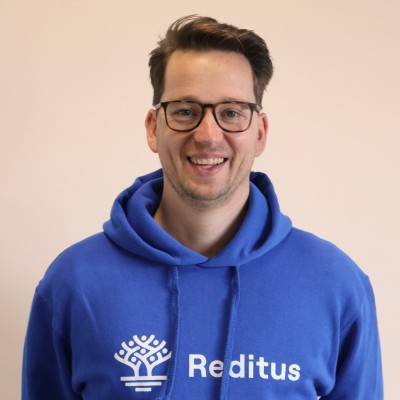
Koen Stam
Meet the host
Back in 2020 I was an affiliate for 80+ SaaS tools and I was generating an average of 30k in organic visits each month with my site. Due to the issues I experienced with the current affiliate management software tools, it never resulted in the passive income I was hoping for. Many clunky affiliate management tools lost me probably more than $20,000+ in affiliate revenue. So I decided to build my own software with a high focus on the affiliates, as in the end, they generate more money for SaaS companies.
S7E22 – Zero to 10K MRR: The Most Practical Advice from Founders and Operators
Zero to 10K MRR: The Most Practical Advice from Founders and Operators Every episode of season seven asked the same question: what advice would you give a SaaS founder who … S7E22 – Zero to 10K MRR: The Most Practical Advice from Founders and Operators
S7E21 – How AI Will Rewrite SaaS GTM in 2026: Pricing, Efficiency & Sales Automation with Jacco van der Kooij
In this episode of the Grow Your B2B SaaS podcast, host Joran welcomes back Jacco van der Kooij, founder of Winning by Design, to unpack how AI-native SaaS companies are … S7E21 – How AI Will Rewrite SaaS GTM in 2026: Pricing, Efficiency & Sales Automation with Jacco van der Kooij
S7E19 – How SaaS GTM Will Change in 2026: Thought Leadership, Intent Signals & AI-Powered Growth with Glenn Miseroy
How SaaS GTM Will Change in 2026? In this episode of the Grow Your B2B SaaS podcast, host Joran welcomes Glenn Miseroy, co-founder and CEO of Expandii, a cloud-based LinkedIn … S7E19 – How SaaS GTM Will Change in 2026: Thought Leadership, Intent Signals & AI-Powered Growth with Glenn Miseroy