S7E16 – SaaS GTM in 2026: AI, Hybrid Sales & High-Performance Revenue Engines with Richard Schenzel
Show Notes
SaaS GTM in 2026 is being redefined by AI, hybrid sales motions, and high-performance revenue engines that enable faster growth, smarter operations, and more scalable customer acquisition. In this episode of the Grow Your B2B SaaS podcast, recorded live at the SaaS Summit Benelux in Amsterdam, host Joran sat down with Richard Schenzel from AtScale. Richard and his team act as operating partners for B2B SaaS companies, helping them build, structure, and scale sales operations with a strong focus on improving performance.
The conversation centered on how go-to-market (GTM) strategy is changing in 2026. From the rise of blended motions and the evolving role of ACV across PLG and sales-led setups, to how AI will reshape the entire funnel, Richard shared a pragmatic view into what will separate the SaaS companies that scale successfully from those that fall behind. He also explained why now is the time for deep introspection, how to audit your GTM machine, and why roles like SDR/BDR must be rethought in an AI-driven world.
AI Is Here, But Adoption Requires a Diagnosis First
AI is rapidly accelerating across SaaS organizations, but Richard stresses that adding more tools alone does not create progress. With more than a dozen new AI tools launching every day, the real question becomes how companies can keep up and integrate effectively. He insists that the first step toward meaningful adoption is a thorough audit of the existing GTM setup. Many companies are already running blended motions without realizing it, and without a diagnosis, they risk adding complexity rather than building effectiveness. By evaluating current workflows, tech stack performance, and motion design through the lens of ACV, teams can understand where they should play and what it takes to win, rather than attempting to operate on all fronts at once.
ACV and the New Flexibility in GTM Motions
Average Contract Value continues to be a foundational element of GTM design, but Richard notes that the implications are evolving. Product-led growth can now support higher ACVs than ever before, meaning PLG is no longer limited to low-contract deals. This expanded capability does not, however, change the core economics of sales-led motions. Full AE-led or SDR/BDR-plus-AE setups still require sufficiently high ACVs to justify the cost. AI may extend the reach of PLG, but it does not rewrite the financial logic of sales-heavy approaches. Instead, it broadens what is feasible for PLG while keeping the fundamentals of motion alignment intact.
Efficient Growth Over Growth at All Costs
The “growth at all costs” era is long gone, and Richard believes that shift occurred several years ago. While growth remains essential, it must now be balanced with margin and operational effectiveness. AI becomes a key lever in finding this balance, helping companies streamline operations and improve economics without sacrificing top-line performance. The goal is no longer just accelerating growth but identifying the most efficient path to achieving it with the resources already in place.
Where AI Will Reshape the Funnel: From Upper-Funnel Signals to Onboarding
Across the bowtie model, Richard identifies multiple areas where AI can eliminate repetitive tasks and improve accuracy. Upper-funnel intent signals can be captured and activated automatically, allowing teams to focus on higher-quality leads. SDR activities such as high-volume emailing and dialing (work that is repetitive by nature) can be automated, freeing reps to concentrate on conversations that require genuine human understanding. Lead scoring and the aggregation of buyer signals throughout the sales cycle can be automated to improve prioritization and conversion. Even onboarding benefits from AI-generated assets like instructional videos, making enablement scalable across all customer segments, not just PLG or lower-ACV environments. The unifying theme is to automate repetition while elevating human engagement where it matters most.
The Human Element: Redefining the SDR/BDR Role
In a world where automation handles more of the repetitive work, human connection becomes the true differentiator. Richard defines modern BDR success through meaningful conversations, curiosity, and deep understanding of the customer’s situation. The job is no longer to send sequences or dial endlessly; it is to build relationships and create relevance. Anything that does not require emotional intelligence or genuine understanding should be automated so that SDRs and BDRs can focus on the work that truly impacts pipeline quality.
Headcount Planning: Rethinking Roles, Not Just Reducing Numbers
While AI will inevitably influence headcount, Richard views this shift as a redefinition of roles rather than a systematic reduction. He encourages companies to reassess every function to determine what can be automated and where human contribution is essential. Legacy expectations of roles like SDRs must be revisited, especially if those roles are still centered on tasks that can now be automated. Companies should aim for the right composition of technology and people, remembering that humans remain essential for training, governing, and improving AI systems. The outcome may be fewer roles, but more importantly, it results in better-defined roles that deliver real value.
What Will Separate the Winners in 2026: Agility and Adoption of Change
According to Richard, the biggest differentiator between winners and laggards in 2026 will be the speed at which companies can adapt. The fundamentals of growth and customer impact remain unchanged, but the pace of change has accelerated dramatically. Winning companies will be those that regularly step back from day-to-day execution, reassess their direction, and pivot quickly when needed. Being stuck solving yesterday’s problems is the surest way to lose momentum; agility is now a core competency.
Implementing Change: Start With “Why,” Then Build the Right Pyramid
Richard encourages organizations to begin every transformation by questioning why their current processes exist. Many companies operate on legacy logic simply because “that’s how we’ve always done it.” By stepping back with leadership and teams, companies can redefine their purpose, clarify their game, and determine what it takes to stay ahead. He warns early-stage companies against building their systems around existing people and then layering process and technology on top. Instead, the pyramid should be reversed: define the right processes first, implement technology to support them, and finally place the right people into roles that align with the new structure. This order forms a scalable foundation and prevents companies from getting stuck as they grow.
How to Know What’s Broken: Audit Your GTM and Use Data to Find Bottlenecks
Richard believes that identifying what is broken starts with a structured GTM audit. By scoring every component of the GTM engine on a scale from one to five, companies can quickly see where performance lags. This includes reviewing hiring, onboarding, performance management, and talent development on the individual side, as well as demand generation, sales execution, client success, and RevOps on the systems side. These audits can be done internally or with external help, but they require honest conversations about bottlenecks and data-informed reflection. Using the bowtie model to examine volume, conversion, and time at each stage makes it easier to detect slowdowns, even for early-stage companies. Leaders should see themselves as facilitators whose job is to remove friction and unblock the system.
Practical Areas to Automate and Augment, Without Losing the Human Touch
Richard highlights several practical areas that companies can improve immediately by combining automation with human expertise. Intent capture and activation can be automated to streamline top-of-funnel effectiveness. SDR and BDR workflows can be redefined so that automation handles repetitive outreach while humans focus on building meaningful relationships. Lead scoring and buyer-signal ingestion can be automated to increase prioritization accuracy and improve conversion throughout the pipeline. Customer onboarding benefits from AI-generated content that allows companies to equip users consistently at scale, regardless of ACV. The golden rule remains clear: allow automation to handle repetition so humans can handle connection.
For Founders: From 0 to 10K MRR, Laser Focus and Scalable Learning
When advising early-stage founders, Richard underscores the importance of clarity and learning. Founders should be laser focused on their target market and buyer persona, even if early revenue depends on selling to whoever shows interest. Understanding why customers buy, learning quickly, and speaking to as many prospects as possible is essential in this research-heavy stage. Founders should also avoid building their product around single large customers, which can lead to unscalable complexity. Choosing the right niche with a viable market size is critical, especially for those tempted to focus solely on enterprise opportunities.
From 10K MRR to 10M ARR: Alignment, ICP, and Saying Goodbye to Features
Scaling beyond the early stages requires alignment across the entire organization. Richard stresses that ICP should be the shared focus of management, product, sales, and marketing. If each team targets a different ICP, misalignment creates friction and slows growth. As companies grow, they must be willing to let go of features or customer segments that no longer fit their identity. What brings a company to 10M ARR will not be what brings it to 100M. Alignment on identity, purpose, and target customer is non-negotiable for scaling effectively.
The Bowtie as a Simple Diagnostic and the Leader’s Role
The bowtie funnel provides a simple yet powerful diagnostic tool. By analyzing volume, conversion rate, and time across each stage, companies can quickly determine where the system is slowing down and take targeted action. This framework supports ongoing GTM audits and strengthens performance management. Leaders play a crucial role in this process by removing barriers, enabling their teams, and maintaining visibility across the value chain. While technology has evolved, the leadership responsibility to facilitate success remains constant.
Efficiency Through AI: What’s New and What’s the Same
Despite the innovations AI enables, the fundamentals of growth remain unchanged. Companies still need to acquire customers efficiently, create impact, and maintain alignment around their ICP. What has changed is the speed at which companies can identify intent, automate repetitive tasks, create onboarding assets, and use data to support decision-making. In this new environment, success depends on designing scalable processes first, adding the right technology second, and staffing roles with people who can deliver the highest value.
Sponsor Note from the Episode
The episode also highlights Reditus, a referral and affiliate platform built specifically for B2B SaaS companies. The platform combines in-app referral programs, an affiliate network of more than twenty thousand SaaS partners, and AI-powered affiliate recruitment that helps founders identify relevant promoters. With white-glove migration support, centralized program management, and integrated tracking, payouts, and fraud detection, Reditus offers a streamlined and scalable way for SaaS companies to expand their reach.
Final Takeaways: Prepare, Audit, Align, and Adapt
As 2026 approaches, successful companies will share several traits. They will audit their systems before adding new tools and understand their GTM motions in relation to ACV. They will automate repetitive tasks and use AI to amplify efficiency while preserving human connection for high-value work. They will redefine roles based on value rather than historical expectations and build scalable systems by prioritizing process, then technology, then people. They will align their entire organization around a shared ICP and update it as they evolve. Most importantly, they will embrace agility by stepping back, reassessing frequently, repivoting when necessary, and adapting faster than the market demands.
Key Timestamps
- (0:00) – The 2026 B2B SaaS GTM Shakeup: AI, PLG vs Sales-Led & ACV Truths
- (0:00) – Meet Richard Schenzel: The B2B SaaS Sales Ops Performance Architect
- (0:01) – GTM in 2026: AI-Driven Plays, Blended Motions & ACV Strategy
- (0:02) – Why 2026 Demands a Full GTM Audit: Blended Motions + ACV Reality
- (0:02) – PLG vs Sales-Led: How ACV Decides Your Entire GTM Motion
- (0:03) – The New Era of Efficient SaaS Growth: AI, Margin & Sales Efficiency
- (0:04) – Bow-Tie Model Power: Where AI Creates Massive GTM ROI
- (0:04) – Automate Your Sales Engine: AI Intent, Scoring, SDR Workflows & CS
- (0:05) – The 2026 SDR: Human Connection Beats Sequencing Automation
- (0:06) – 2026 Headcount Reset: New SDR/BDR, AE & RevOps Roles
(0:07) – Train the Machines: Why People Still Win in AI-Driven GTM - (0:07) – Ad Break: Reditus – The AI Affiliate Engine for B2B SaaS
- (0:08) – What Will Make SaaS Winners in 2026: Adapt Fast or Fall Behind
- (0:09) – The 2026 Mindset Shift: Stop Fixing Yesterday, Pivot Faster
(0:09) – The GTM Implementation Blueprint: Mission → Strategy → Tech → People - (0:11) – The “If It Ain’t Broke” GTM Trap: How to Spot Hidden Failures
(0:11) – The Ultimate SaaS GTM Audit: 1–5 Scoring Across Every Function - (0:13) – Bow-Tie Data Mastery: Fix GTM Bottlenecks Faster With AI
- (0:14) – From 0 → 10K MRR: ICP, Feedback Loops & Avoiding Enterprise Traps
- (0:16) – Scaling to $10M ARR: ICP Alignment, Feature Pruning & $100M Roadmap
- (0:17) – Evolving Your ICP: Stay True to Your Customer & Your Mission
- (0:17) – Connect With Richard Schenzel on LinkedIn
Transcription
– Joran
Welcome back to the Grow Your B2B SaaS podcast. Today, I’m joined by Richard Schenzel from AtScale. Richard helps B2B SaaS company structure and scale their operations with a strong focus on performance. In this episode, we dive into how go-to-market strategy is changing in 2026, from the rise of blended motions to how ACV influences PLG, sales lead, and hybrid setups. Richard also explains how AI will reshape the entire funnel from intent signals and SDR workflows to onboarding, efficiency, and headcount planning. We discuss how to balance automation with human connection, why companies must rethink roles like SDR/PDR, and what separates SaaS companies that successfully scale in 2026 from those that fall behind. Let’s go to Amsterdam as this episode is also recorded live at the SaaS Summit Benelux.
– Joran
Welcome to the Grow Your B2B SaaS podcast.
– Richard
Thanks a lot for having me.
– Joran
Could you quickly introduce yourself? Who are you and what do you do, Richard?
– Richard
My name is Richard. I’m working for a company called AtScale. We We are an operating partner term, helping B2B SaaS companies to build, structure, and scale their sales operations with a strong focus on improving sales performance.
– Joran
We’re going to talk about go-to-market. We’re going to talk about go-to-market in 2026. How do you see things changing in 2026 when we talk about go-to-market?
– Richard
A lot of things are changing, especially with the arrival of AI, although it was there for a while. I think more and more companies realized that they need to implement it. But adding another tool or another solution is not going to be the solution. At the moment, there’s a base of 13 new AI tooling that will launch every single day. So how can you keep up with the market and how do you integrate it? I think the first step you need to do is look at what you have today internally and how do you make sure that you can adopt these new tooling, new solutions as well. I think it comes down to a full diagnosis of your current tech stack, the current way of working, and the change in GTM in your motions really depends on your ACV, but you see more and more blended go-to-market motions, and you need to nail them on all sides, but you need to take this step by step. I see too many companies that have blended go-to-market motions without even realizing. Start with a full audit or use the upcoming weeks before 2026 kicks off. Have a full audit of your current go-to-market based on your ACV as well.
– Richard
That’s always the starting point. And then when do you need to be successful? Where do you want to play? Because you can’t play on all fields at the same time.
– Joran
Yeah, and it’s interesting. You mentioned ACV, so average contract value. Typically, there was a certain threshold where you said you have to go sales that when you have that threshold. Is that changing, I guess, now with the leverage of AI and automation?
– Richard
It is changing indeed, but you see the ACV goes up even for a PLG motion, or you can get away with a PLG motion, even though the ACV is maybe higher than we were used to. The same logic applies for a full sales cycle AE motion or a two-step sales motion with an SDR, BDR. If the ACV is too low, it still doesn’t make sense. I think the PLG motion is broadening up, and I think the HV is rising for the PLG motion. It doesn’t change anything on the full sales cycle, AE part, the two-step sales cycle, and the ABN motion.
– Joran
I When we talk about, probably specifically, the sales motion, I mean, efficient growth has been a hot topic as well. How do you see things changing or what is going to be the challenge for SaaS companies in 2026 to have that motion but still grow efficiently?
– Richard
Growth will never change. I think that’s something we saw today during one of the keynotes as well. Growth is something that will stay. Growth at all cost is over, but that was over for 3-5 years already. It’s the efficient growth indeed. It’s the combination mission of your growth with your margin and your effectiveness. I think the arrival of AI or implementing AI can help you to become more efficient while you can have a more efficient growth path. Look at not only the growth rate It’s in itself, but how can you become more efficient with your current organization.
– Joran
Yeah. Is there any aspect within your organization which is going to be affected the most, I guess, or when you look at the Bow-Tie model, is it going to be, for example, acquisition, activation, expansion? Where are the biggest potentials?
– Richard
I think anything that is a really repetitive task can be automated. If you look at upper funnel, getting the right intent to go to market to become efficient can be automated. If you still have SDRs just to ditch out emails, which you shouldn’t, by the way, you can automate this. Getting signals in the single cycle can be automated with lead scoring, etc. You can get way more intent nowadays to increase your conversion rate to become more effective. In terms of onboarding of your customers, previously, you needed maybe an onboarding manager, an implementation manager, whatsoever. With AI tooling, you can create a lot of onboarding videos to really equip and enable your customers to use your platform. This was something that was mainly applied in the PLG motion or lower ACV type of solutions, but this is something that is super accessible nowadays that you can apply for any type of customer.
– Joran
You mentioned also as well that the SDR shouldn’t be sending emails anymore, right? Drafting the emails, right? What should they be doing? When you look at the sales motion, what is going to change? Where should they spend their time on to make sure that they focus on the right things?
– Richard
We are getting into an era where we need to balance automation and technology with the human approach. In the end of the day, we are still seeking human connections. It has always been. For me, if you ask me, When is a BDR successful? If If they can create meaningful connections, if you can have relevant conversations, ditching out emails or just dialing numbers, that’s not the game. It’s creating that relationship, building a relationship, and be overly obsessed with your prospect and be curious, have that eagerness to learn and understand their situation because it’s the only way where you can pivot your sales pitch or not even a pitch, but make that connection. That is for me the most important thing. Anything else can be automated.
– Joran
Yeah, so really enabling them to what they’re hired for, building their relationship. Absolutely. When we go talk more about scaling, we now can leverage AI, we can now leverage automation. Is it also going to impact the head count maybe, or is it also going to impact the type of people we’re going to hire?
– Richard
It can impact the amount of people. I think it’s just a good moment now to reflect on what type of roles do you have, what can be automated, and where do we need people. It’s more about the redefinition of the roles that can lead to a lower amount of headcount in the future. But it’s more rethinking your role. Like I just mentioned, the SDR is something to rethink. If you still believe that it’s just about sending sequences, you should rethink the position. I think that’s for every position in your company or every function group or department. What can we automate? Where do we really need people? It’s just building this composition between automation and human beings.
– Joran
Yeah. In the end, you need to train the automation to do the work.
– Richard
We still need people, yeah.
– Joran
Yeah. You need to do some things yourself first before you’re able to identify what can you actually automate, right?
– Reditus Ad
Are you already running an affiliate or referral program, but it’s not really driving growth? Reditus is the affiliate and referral platform built exclusively for B2B SaaS. Combining an in-app referral program, an affiliate network of over 20,000 SaaS affiliates, and AI-powered recruitment that finds new relevant affiliates for you. Migrate for free with our white glove service. Affiliates can keep their link, and you can start managing both programs from one single place. With tracking, payouts, and fraud detection all handled for you. You can start building a scalable growth channel that compounds without high upfront costs. Want to learn more? Check out getreditus.com.
– Joran
If we talk about scaling, what do you think are going to separate the SaaS companies that are going to successfully scale in 2026 and the ones that don’t?
– Richard
The biggest part is, I think, the ability to adapt to the current situation. The only thing that is different right now is that it changes faster than we were used to. Companies that will outperform the media with companies is mainly on how they can adopt the change. And that’s faster than we were used to. But a lot of things stay the same. We still need growth, we still need customers, we still need to make impact. It’s just that we need to do it faster. And who can adopt, who can repivot or reinvent themselves to stay ahead of the curve?
– Joran
It’s almost like people need to be able to change their mindset a little bit, like what’s Yesterday won’t maybe work tomorrow.
– Richard
It’s like, are you agile enough to do so? Are you stuck in your problem from yesterday or last year and you’re trying to solve your problems from yesterday? Or are you able to take a step back, look at the current situation and see what is needed to be successful and be an A player? Yeah.
– Joran
I have the feeling you already did this with certain companies. You did it with clients. What is the process, I guess, you walked into? Because we make it sound super simple right now, right? You’re going to run into challenges, probably. Correct. What is the process and what are the challenges you’re going to run into when you try to have them implement a new mindset?
– Richard
One of my favorite questions during my engagement with my customers is, why do you do the things like you do today. And quite often people reply like, Yeah, this is how we always done it. And I think that’s a… I don’t always die a little inside if I hear this, but just taking a moment with your team, with your management team, and take that step back for that reflection. Why do we actually do the things like we do them today? And what can we change? I think we are so caught up in the hamster wheel in our day-to-day problems that it’s sometimes too hard to oversee what’s going on in the real world. We’re so stuck in our own bubble. So that’s What’s the first step? Take a step back to reflect and see what is needed. Then you need to build a plan like, who are we? Which game are we playing? What do we need to do to stay ahead of the curve? Then build your plan on it. Based on your why, your mission, vision, strategy, fix and execution, not the other way around. What I see with a lot of companies, like early-stage companies, they really rely on the people they have today.
– Richard
They put some process on top of it and then some technology on top of it to make sure that they can keep the shop open. That would be pretty like that. But you need to adjust yourself like the pyramid the other way around. Start with the right process that is needed to be scalable. Then you find your technology on top of it to support you, to be effective, and then you search for the right people at the right place, not the other way around. There’s a pivotal moment in growth companies where I see a lot of times companies being stuck in a certain stage.
– Joran
Because I think there’s also a saying, why to fix things if they’re not broken? It’s a good mindset to keep looking like, how can you prove things? But sometimes, why should you always try to fix things if they’re working? That’s probably the mindset the companies have at that moment when you ask them the certain questions. Correct. Yeah, I guess my question here is, how do you determine that there are actually things broken and you do need to fix certain things which can help you to grow faster or better?
– Richard
What we do is a full audit with our customers on the go-to-market, and we assess them on a scale of 1-5, one not-existent, five in class. And we run an audit based on all types of elements in the go-to-market team around hiring and onboarding, performance management, talent management. It’s more focused on the individual themselves. And then we do a full audit on the sales machine themselves. So how is your demand generation done, your sales execution, client relationship, and your RevOps. And by doing such an audit, even for companies, you don’t need an external vendor for this, but go sit down with your teams to do a performer audit of what’s going well today or what’s not going well. Ask your people about all the bottlenecks, the hiccups. Reflect with data. With AI, you can assess a lot of data way faster than we used to. What are your bottlenecks? Where does your business slow down and try to fix it. Even if you feel that today you don’t have a problem, ask yourself the question, is this sustainable in the long run? Am I able to be successful in 6 months, 12 months from now with the right setter?
– Richard
You don’t have to overengineer it, but you need to be aware of the situation to be prepared for the change because it’s changing faster than we are used to. So you need to be prepared for that change as well.
– Joran
Yeah. And I think one thing you mentioned really well is having the data, so you would be able to see, I guess, what is happening. And of course, we had Jaco at the keynote where he said, three of your company as a factory line, so you can see where things are broken, if things power up in the process. Correct. Yeah. But you need to have the data in place to actually be able to figure out where it is.
– Richard
Yeah, but you can start fairly quickly. I think the bow tie is a wonderful tool for this as well to see you look at it from a volume perspective, a conversion rate perspective at the time, and where is your blocking? I think that’s fairly simple. Even as a very early stage company, You can fairly easy find this data already to see what are the bottlenecks and try to unblock it. As a leader, your biggest task is to facilitate success, and that’s why you should help your teams to be successful. Try to find where the biggest bottlenecks to change this. But this is not something new. This has always been the case. This is what we should do for over 100 years. We are in a lecture position nowadays that we are way more tooling to be faster and more efficient.
– Joran
Yeah, so the fundamentals didn’t change. We can just identify them quicker where things are wrong. We’re going to dive into the final two questions. If you could give advice to a SaaS founder who’s just starting out and growing from zero to 10K monthly recurring revenue, what would How would you tell that person?
– Richard
Laser focused on your market. Be obsessed with your buyer persona. First of all, try to figure out who is my real asset, especially in the beginning. That’s hard because you just take whatever you want, but you need to get intent from them, why they buy from me. Be obsessed with the market at that stage. Learn and test fast or test and feel fast, basically. But try to learn as much as possible from your buyer persona. How is the market reacting to it? Because you need to build that ICP or the buyer persona up quite quickly after this stage. But it’s just like research mode. So speak to as many people as possible, try to get as much input as possible, but make sure that you build a scalable product as well. If you have one massive customer and you build your tool around this customer, then you’re stuck. Then you’re like a one freak pony. So stay agile. Make sure that everything you build is scalable. Try to get as much feedback as possible from market, but look at your own niche market where you want to grow. Because if you only go after the enterprise companies, your total restaurant market is most probably way too small.
– Richard
And if you need to build features for all the 24 customers that you got to have in the enterprise segment. It’s unscalable, it’s very hard to maintain, and it’s very hard to sell in the end as well. So feedback, that’s a gift, and that’s something you need to seek at the beginning of this cycle. Nice.
– Joran
That’s We’re going to assume we pass 10K MRR, and we’re going to make a huge step towards 10 million ARR. In this process, what advice would you give SaaS founders?
– Richard
Focus. What I said before, the ICP definition should be the center of your commercial team. Icp is not something that is run by a sales team or marketing, should be aligned from management products, et cetera. I see too many companies where marketing has their own ICP with a wonderful storyline. Sales is going after other companies. Product is building a product for something else, and then you end up with a very scattered teams. That alignment, breaking the silos within your go-to-market teams, that’s the most important thing. And maybe say goodbye to certain features. What brought you to 10 million is not going to bring you to 100 million. So it’s about identifying who you are today and creating a roadmap for yourself, how you need to get to that 100 million.
– Joran
Yeah, and I think that’s also with the ICP. What might have been a good client when you started out will change over time as long as you all agree to the same one.
– Richard
That’s the thing, yeah. So agree to who you are, why you exist in the market, why you’ve built this product, and why people should care about you. And that could change over time.
– Joran
Yeah. If people want to get in to contact with you, Richard, how can they do so?
– Richard
You can always follow me on LinkedIn or send me a message there. Happy to respond there.
– Joran
Nice. We’re going to add a link to your LinkedIn profile so people can find you. Awesome. Thank you for coming on. Thank you very much. Thank you for We’re watching this show of the Grow Your B2B SaaS podcast. You made it till the end, so I think we can assume you like this content. If you did, give us a thumbs up, subscribe to the channel. If you like this content, feel free to reach out if you want to sponsor the show. If you have a specific guest in mind, if you have a specific topic you want us to cover, reach out to me on LinkedIn. More than happy to take a look at it.
– Joran
If you want to know more about Reditus, feel free to reach out as well. But for now, have a great day and good luck growing your B2B SaaS.
About the guest
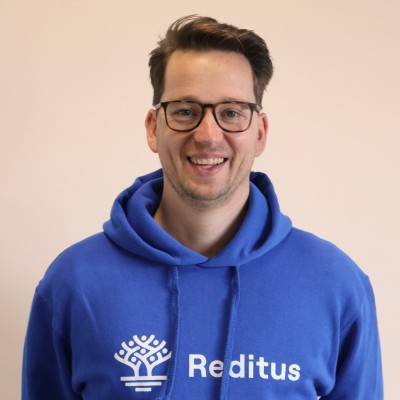
Richard Schenzel
Meet the host
Back in 2020 I was an affiliate for 80+ SaaS tools and I was generating an average of 30k in organic visits each month with my site. Due to the issues I experienced with the current affiliate management software tools, it never resulted in the passive income I was hoping for. Many clunky affiliate management tools lost me probably more than $20,000+ in affiliate revenue. So I decided to build my own software with a high focus on the affiliates, as in the end, they generate more money for SaaS companies.
S7E22 – Zero to 10K MRR: The Most Practical Advice from Founders and Operators
Zero to 10K MRR: The Most Practical Advice from Founders and Operators Every episode of season seven asked the same question: what advice would you give a SaaS founder who … S7E22 – Zero to 10K MRR: The Most Practical Advice from Founders and Operators
S7E21 – How AI Will Rewrite SaaS GTM in 2026: Pricing, Efficiency & Sales Automation with Jacco van der Kooij
In this episode of the Grow Your B2B SaaS podcast, host Joran welcomes back Jacco van der Kooij, founder of Winning by Design, to unpack how AI-native SaaS companies are … S7E21 – How AI Will Rewrite SaaS GTM in 2026: Pricing, Efficiency & Sales Automation with Jacco van der Kooij
S7E20 – How SaaS Companies Will Scale in 2026: GTM Efficiency, RevOps, and Word-of-Mouth Growth with Koen Stam
How will SaaS Companies scale in 2026? The next era of SaaS growth won’t be won by adding more reps, more tools, or more noise. In this episode, go-to-market operator … S7E20 – How SaaS Companies Will Scale in 2026: GTM Efficiency, RevOps, and Word-of-Mouth Growth with Koen Stam